

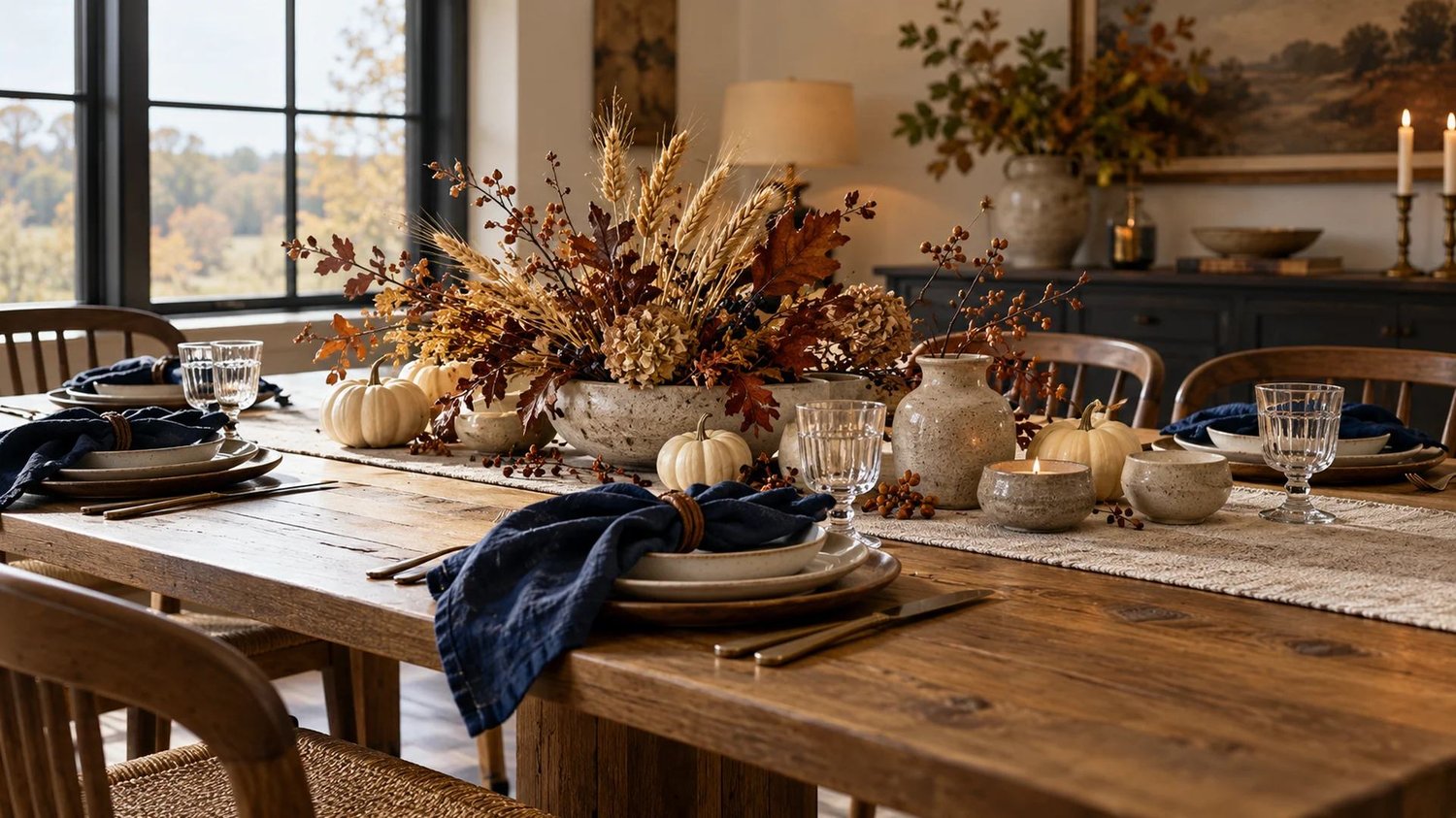
Thanksgiving decorating does not have to mean covering the table with bright orange pumpkins and disposable seasonal accessories. A warm wooden surface, cream ceramics, natural linen, a few autumn branches, and handmade indigo napkins can create a quieter table that still feels festive.
Deep blue brings contrast to the familiar gold, brown, rust, and ivory tones of fall. Because indigo textiles can be used throughout the year, the result also feels less temporary than holiday-only decor. This guide explains how to choose, finish, fold, and arrange blue-and-white napkins for a practical Thanksgiving meal.
Why Indigo Works for Thanksgiving
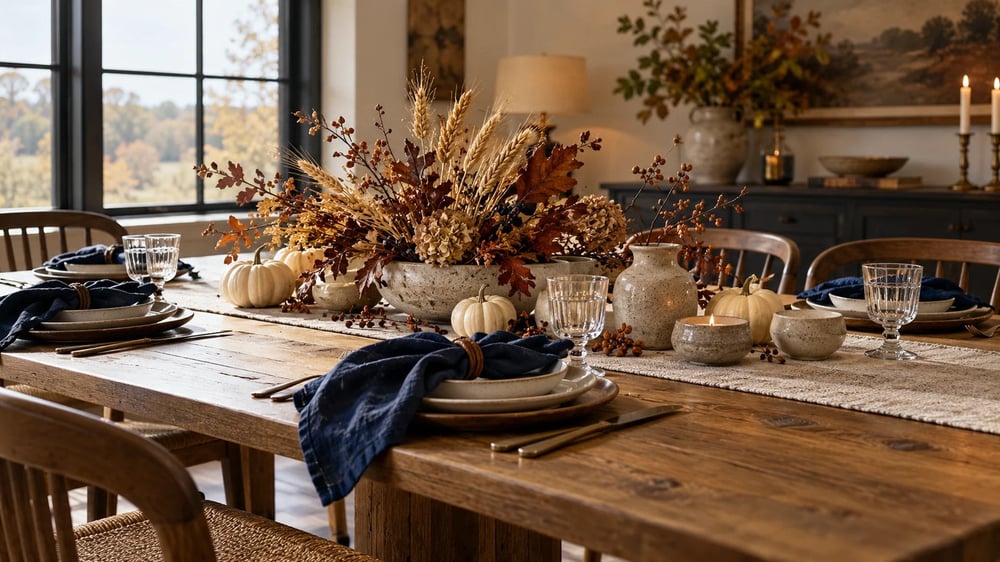
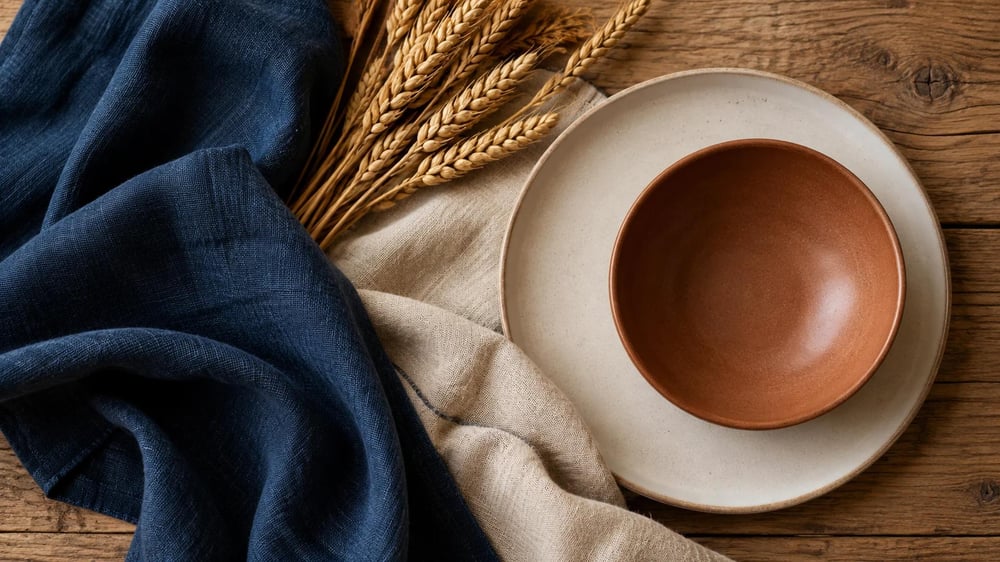
Indigo is a cool color, but it becomes inviting beside warm natural materials. On an oak table, blue-and-white cloth makes cream plates look brighter and dried wheat look more golden. It also gives a traditional craft element to a setting built around gratitude and gathering.
Try a restrained palette:
- Deep indigo blue
- Warm ivory or oatmeal
- Natural oak brown
- Muted terracotta
- Soft golden wheat
Use indigo as the main accent rather than repeating blue on every object. A little contrast keeps the setting calm and lets the handmade fabric remain the focal point.
For more ways to use dyed cloth at home, see 10 Beautiful Indigo Dyeing Ideas for Handmade Home Décor.
1. Choose Napkins That Belong Together
Start with four or six napkins, depending on the number of guests. Cotton is soft, practical, and beginner-friendly. Linen has a textured, relaxed appearance that works especially well in farmhouse and natural interiors.
If you are comparing fibers, Best Fabric for Traditional Chinese Indigo Dyeing explains how cotton and linen behave.
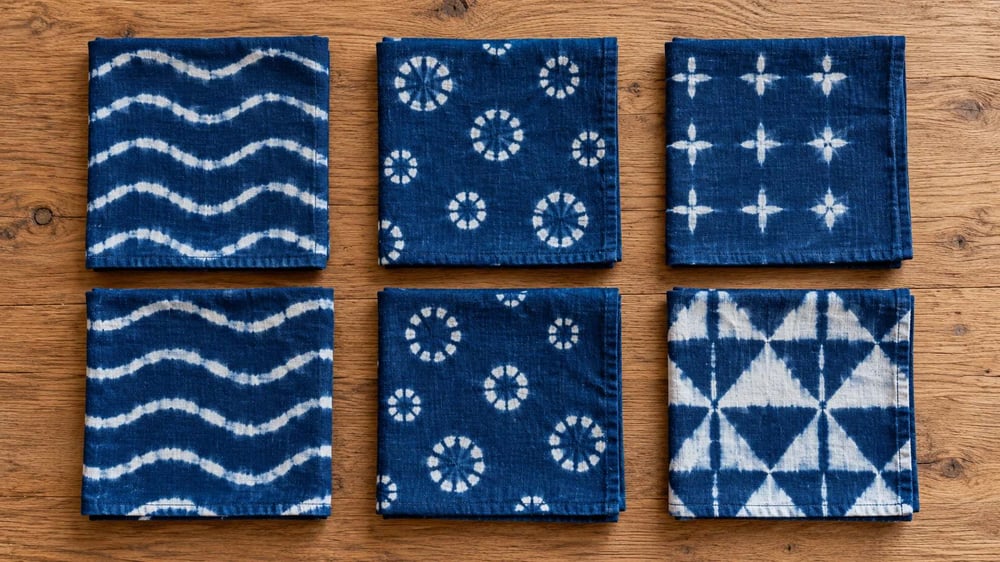
The napkins should be similar in size, but their patterns do not have to match exactly. A coordinated group might include two ripple patterns, two small circular-resist patterns, and two simple geometric folds. Keep the depth of blue reasonably consistent so the set looks intentional.
For a more formal table, use one pattern throughout. For a relaxed handmade look, mix two or three related designs.
2. Make Sure the Indigo Is Properly Finished
Dining textiles need to be clean and properly finished before use. Allow freshly dyed fabric to oxidize fully, then rinse and wash it according to the specific indigo method and fiber. Continue the appropriate finishing process until loose surface pigment has been removed.
When dry, rub an inconspicuous area with a clean white cloth. If significant blue transfers, do not place the napkin beside pale linens or clothing yet. Continue the correct rinsing and finishing process for the dye system.
Smooth the finished cloth gently. Natural creases suit a casual table; press the napkins according to the fiber’s care instructions if you want a more formal appearance.
3. Build a Quiet Background
A bare wooden table is an excellent base because it adds warmth and makes the indigo stand out. If you prefer a tablecloth, choose cream, oatmeal, or natural linen. Avoid another bold print beneath strongly patterned napkins.
A table runner can add structure, but it should not compete with the place settings. When the napkins are dark blue, a neutral runner is often the easiest choice. If the runner is indigo, consider cream napkins or a very simple napkin pattern.
4. Try Three Simple Napkin Folds
Handmade cotton and linen look best in folds that respect their thickness and texture.
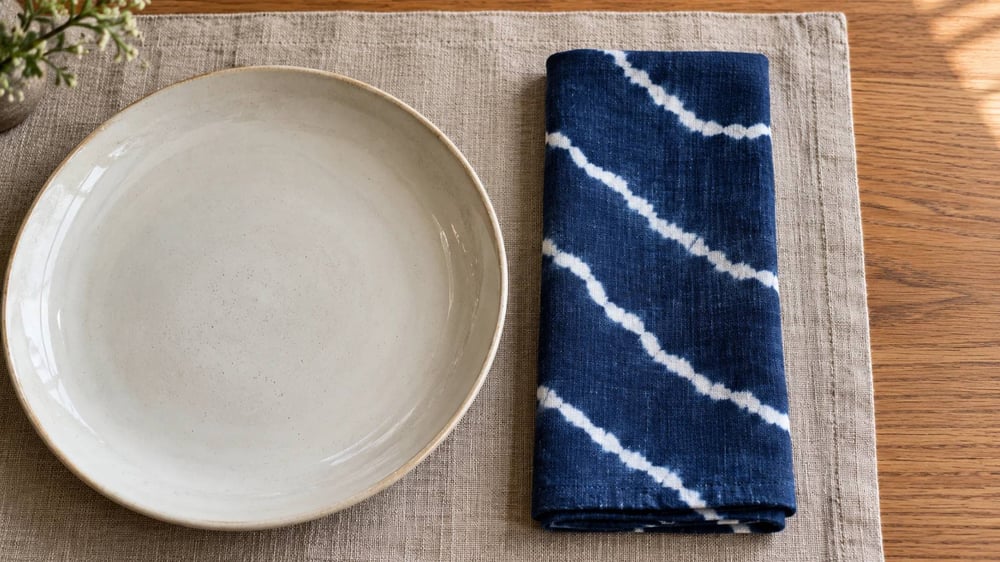
Relaxed Rectangle Fold
Fold the napkin in half lengthwise, then fold it into a long rectangle. Place it beside or beneath the plate. This shape displays ripple and geometric patterns clearly and keeps the table organized.
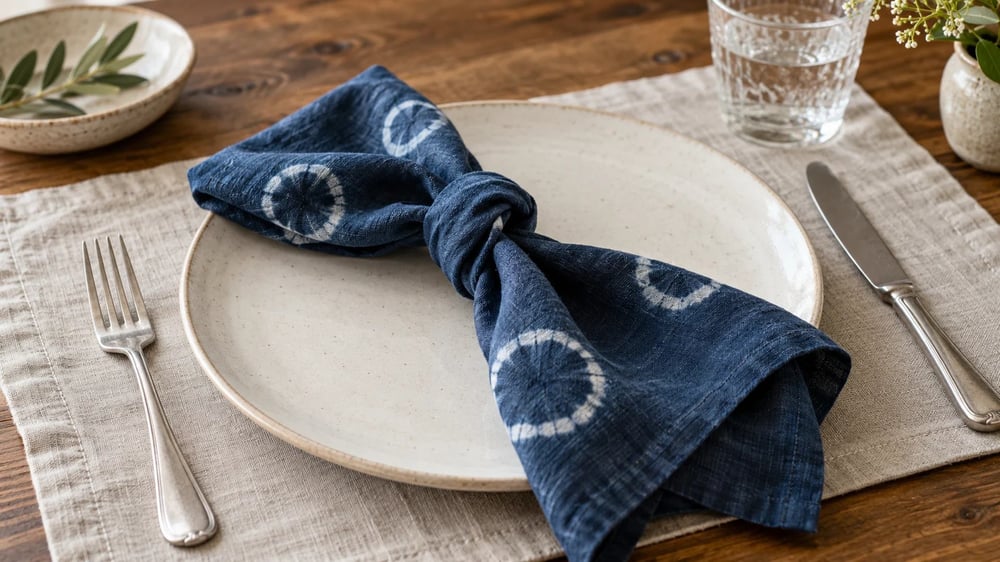
Gather the center and tie one loose knot, then place the napkin on the dinner plate. Do not pull hard enough to distort the cloth. This method creates a soft sculptural shape, particularly with linen.
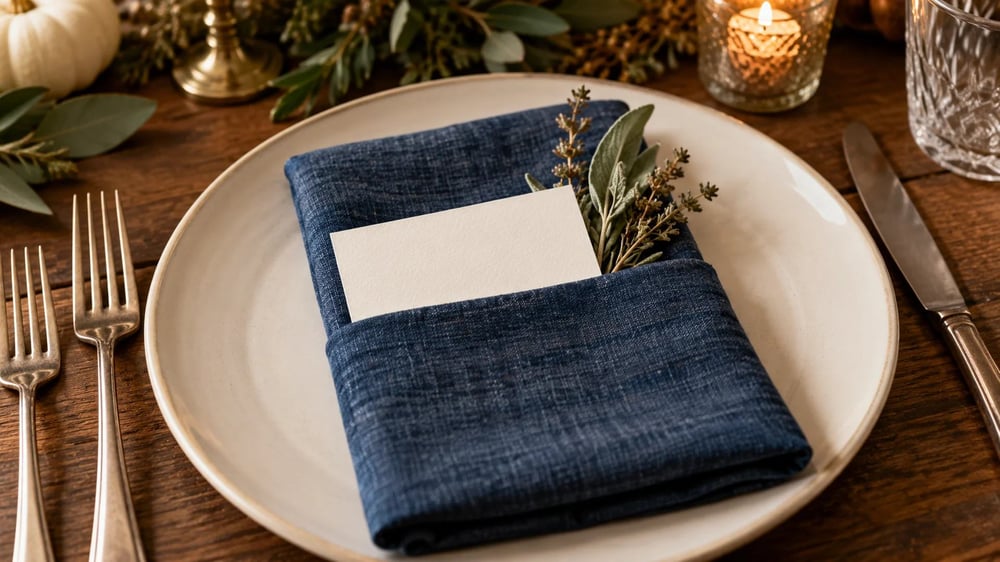
Simple Pocket Fold
Fold the napkin into a rectangle and turn one end upward to form a shallow pocket. Add a blank place card or clean decorative herb sprig. Keep non-food decorations away from eating surfaces where appropriate.
5. Pair Indigo with Simple Dinnerware
White and cream ceramics make blue resist patterns easy to see. Matte dishes create a relaxed farmhouse mood, while glossy white pieces feel more formal. Clear glasses and simple neutral cutlery keep the setting from becoming visually heavy.
A balanced place setting might include:
- One cream dinner plate
- One natural linen placemat
- One handmade indigo napkin
- Simple stainless-steel cutlery
- One clear drinking glass
The effect comes from color, texture, and proportion—not from expensive dinnerware.
6. Add a Low Botanical Centerpiece
Dried wheat, delicate autumn branches, neutral pumpkins, and a little greenery connect naturally with handmade textiles. Keep the arrangement low so guests can see one another. Leave enough space for serving dishes and avoid loose plant material near food.
Repeat only one or two materials across the table. For example, place a small wheat bundle in the center and use a single herb sprig with each place card. Too many different botanicals can compete with the patterns in the napkins.
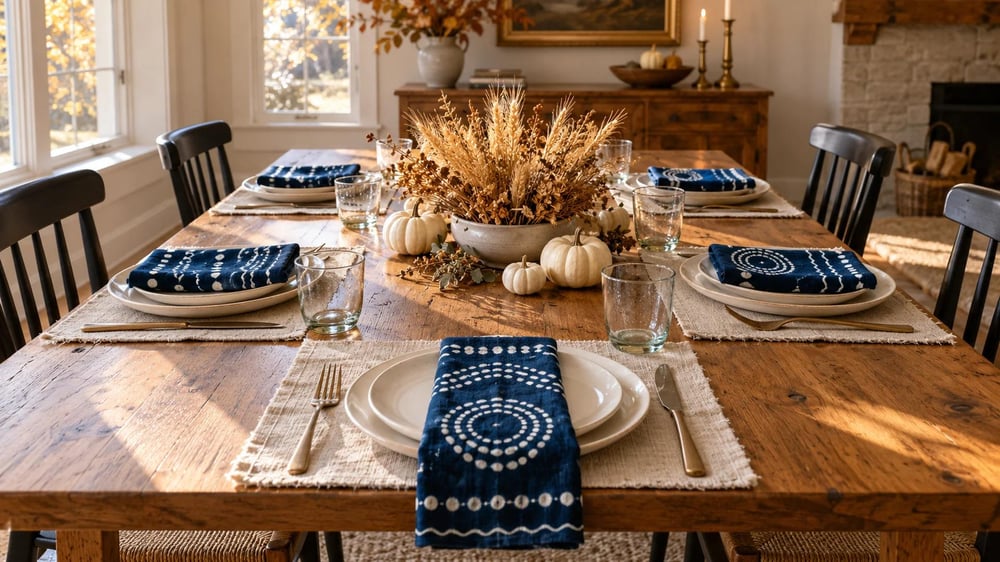
7. Balance the Blue Across the Table
Stand back and view the complete arrangement. Distribute the darkest napkins evenly rather than placing them all on one side. If you mix patterns, alternate them around the table.
Ask three questions:
- Is the blue visually balanced?
- Can every guest reach their plate and glass comfortably?
- Does the centerpiece support the textiles rather than hide them?
You may repeat a small touch of blue in one ceramic bowl, but the napkins should remain the main accent.
8. Add One Personal Detail
A handwritten place card or short note of gratitude makes each setting feel personal. A narrow strip of finished indigo cotton can be tied around a paper menu, provided it is clean and kept away from food.
Small details often feel more thoughtful than elaborate decorations. Choose one gesture and repeat it consistently.
9. Reuse the Setting After Thanksgiving
Remove the pumpkins and wheat after the holiday, but keep the napkins. Pair them with evergreen branches in winter, pale linen and fresh flowers in spring, or clear glass and light wood in summer.
This versatility is one reason handmade indigo works well for people who prefer fewer, longer-lasting home textiles.
How to Make Your Own Indigo Napkins
Begin with prewashed cotton or linen napkins, or allow extra fabric for hems and shrinkage if you are sewing from yardage.
Create a resist using folding, binding, or clamping, then follow the instructions for your specific indigo vat. Allow proper oxidation between dips, rinse thoroughly, and finish the textile before table use.
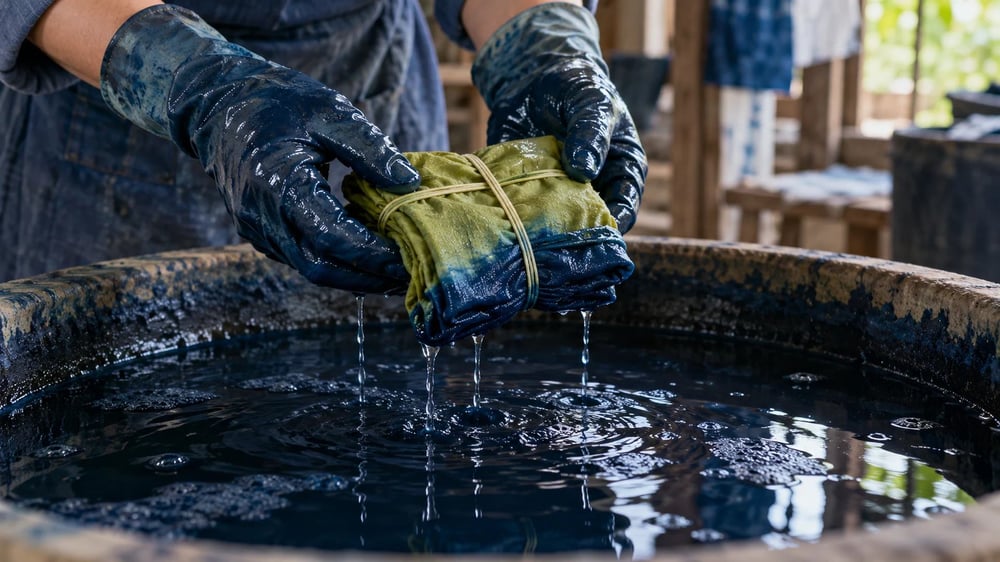
Simple circle, accordion, and ripple patterns are good options because they remain visible after folding. Explore 10 Easy Indigo Dyeing Patterns for Beginners before choosing a set.
FAQ
Can blue napkins be used for Thanksgiving?
Yes. Deep blue pairs beautifully with wood, ivory ceramics, terracotta, dried wheat, and other warm autumn materials.
Do all handmade indigo napkins need to match?
No. Keep the size and general blue tone consistent, then combine two or three related resist patterns for a coordinated handmade set.
What tablecloth color works with indigo napkins?
Cream, ivory, oatmeal, and natural linen provide a quiet background that lets the blue-and-white pattern stand out.
Are handmade indigo napkins washable?
Yes, when made from washable natural fiber and properly dyed and finished. Follow the care instructions for the exact fiber and dye process.
Can I make indigo napkins without sewing?
Use ready-made cotton or linen napkins. Cloth cut from yardage normally needs an appropriate edge finish to prevent fraying.
Can botanical stencils decorate napkins?
Yes. A compatible paste-resist method can create white botanical motifs before indigo dye
Comments ()